
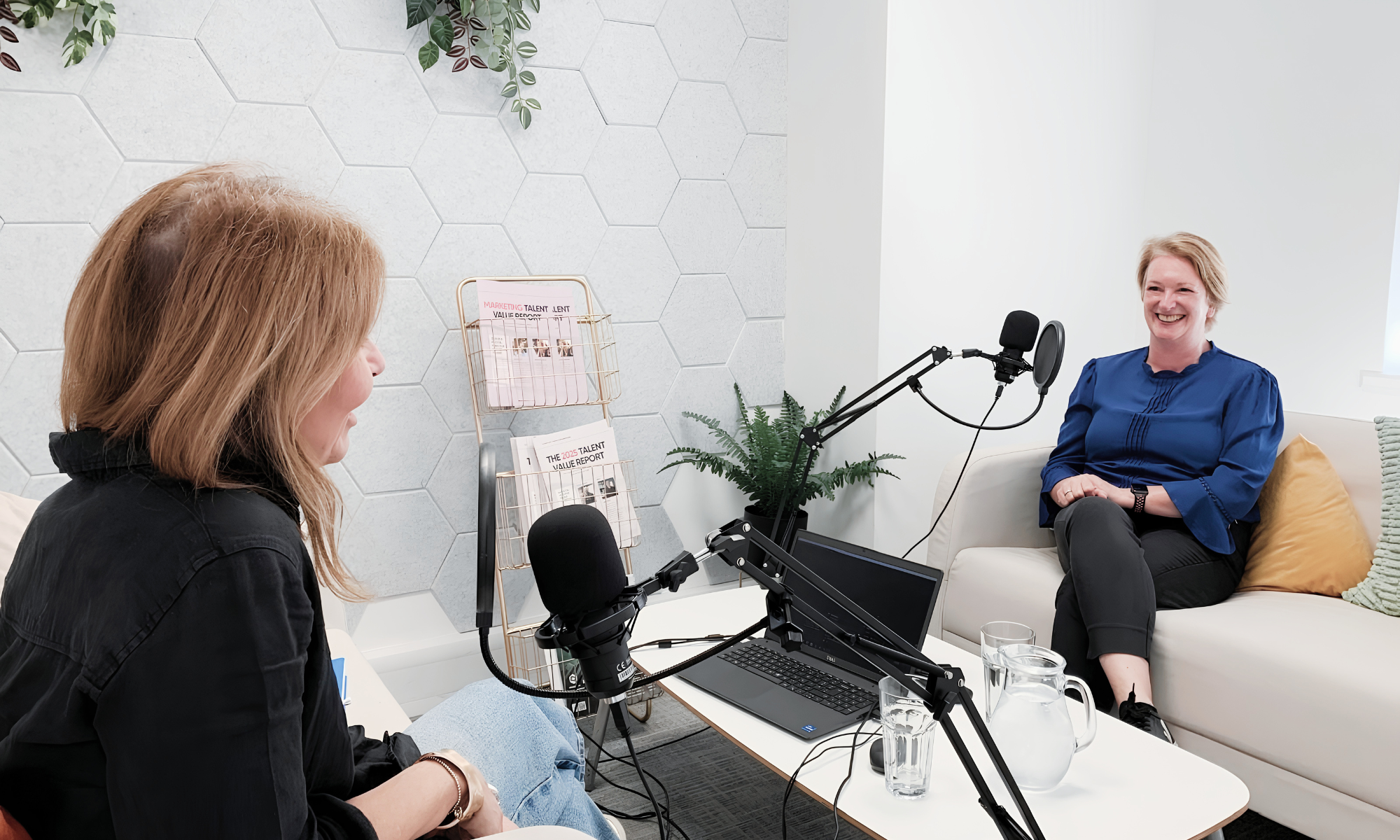
What does it take to become a CMO today? Yvonne Balfour shares the experiences that shaped her journey to the C-suite on Denholm Unzipped .
CLICK HERE FOR OUR PODCAST WITH MARISA CARROLL AND YVONNE BALFOUR
There was a time when the journey to CMO was relatively easy to recognise. It was more linear and typically followed a traditional marketing pathway. But the role has changed.
As customer journeys have become more digital and organisations more data-led, the boundaries between marketing, customer, technology and transformation have become less distinct.
In some businesses, bringing these areas together under one CMO makes sense. In others, it creates an extraordinary span of responsibility that is almost impossible to fulfil.
The important issue for a CEO is coherence. The responsibilities sitting beneath a CMO need to make sense together, and the individual needs the leadership capability, authority and organisational support to lead them effectively.
This is where the conversation about a senior appointment becomes inseparable from the conversation about organisational design.
Before asking who the next CMO should be, there is value in being very clear about why the role exists in its current form. What problem is the appointment intended to solve? Where does accountability for growth really sit? Who owns the customer? How are commercial decisions made? What does the CEO need from this person that is currently missing around the executive table?
And, importantly, is the CEO looking for a CMO to lead the marketing strategy, or for an executive who will also help shape the strategy of the wider business?
Closing the gap to C-suite
This connects to a conversation I have regularly with senior candidates. They might be a brilliant Marketing Director, Commercial Director or functional leader and be thinking about their next move: I'm ready for a C-suite role, but how do I actually make that step?
I think that's an interesting question because being very good at your function gets you a long way, but it doesn't necessarily prepare you for everything that comes with operating at executive level.
Can you think about the whole business rather than only your function? Can you understand the commercial implications of the decisions you're making? Can you contribute meaningfully to business strategy? Can you influence a CEO, CFO and executive peers who see the business through very different lenses? Can you lead change when many of the people you need to bring with you don't report to you?
And, importantly, how do you get that experience before somebody gives you the C-suite title?
That's something I'm particularly interested in exploring.
What experiences should ambitious leaders actively seek out? Which relationships should they be building internally? Where should they deliberately step outside the comfort of their own function? And what differentiates somebody who is an exceptional functional leader from somebody who is ready to become an enterprise leader?
There is another side to that conversation too - the businesses doing the hiring.
Hiring a CMO
We talk about "hiring a CMO", but what does that actually mean for that particular business?
One CMO role can look very different from another. So before looking for the person, the more important question could be - what do we actually need this person to do?
What is the business priority? Growth? Brand? Customer? Transformation? Data? Building capability? Or does the business need someone who can bring a different perspective to the executive table and contribute well beyond the marketing strategy? All of that changes the person you're looking for.
Why we created Denholm Unzipped
These are some of the conversations that prompted us to create Denholm Unzipped. I spend a lot of my time talking to senior leaders about where they want to go next, and to businesses about the leaders they need for what comes next.
With Denholm Unzipped, I want to get underneath both sides of that conversation.
How did established executives actually get there? Which experiences shaped them? What did they learn - and unlearn - along the way? What does their role really require today? And what can aspiring leaders learn from their journey?
Equally, what can businesses learn about the people they appoint into these roles - and about defining the role properly in the first place? We're starting with the CMO.
Our first guest, Yvonne Balfour, Chief Marketing Officer at Ultimate Finance, is a particularly interesting person to start that conversation with.
Yvonne's route to CMO was not built around pursuing the title. Her career began agency-side with Navigator, where she experienced an MBO and subsequent sale to Cello Group. She went on to run and integrate businesses before moving client-side, where her roles at Sainsbury's Bank spanned marketing, customer insight and transformation. Today, her remit at Ultimate Finance encompasses marketing and business transformation, and she sits on the executive team.
Seen individually, those are very different chapters of a career. Taken together, they have given her experience of ownership, integration, commercial decision-making, organisational change and functional leadership.
And that's really what I wanted to explore with Yvonne.
Not simply "how do you become a CMO?", but what are the experiences that prepare someone to operate at that level? What changes when you move from being a functional leader to an executive leader? How do you develop the commercial thinking, influence and leadership required to contribute to the wider business? And, knowing what she knows now, what would Yvonne tell someone hoping to make that step themselves?
Listen to my conversation with Yvonne Balfour in the first episode of Denholm Unzipped.
Looking for your next C-suite leader?
If you're appointing a CMO or another senior leader, our Executive Search team can help you define what the business needs and find the people equipped to deliver it.
Explore our Executive Search solution, or for a confidential chat call us on 03303 359 818 or email connect@denholmassociates.com.